
"Fruit growth"
7000 article(s) found

Coffee cultivation techniques
Coffee, cocoa and tea are called the three major beverages in the world, and their output, consumption and output value all rank first. In addition to being used as a beverage, coffee can also extract caffeine and coffee oil; in medicine, it can be used as an anesthetic, stimulant and diuretic cardiotonic agent.
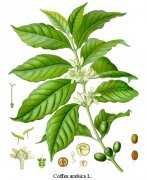
Coffee cultivation techniques detailed explanation of planting knowledge of Coffee trees
Coffee, cocoa and tea are called the three major beverages in the world, and their output, consumption and output value all rank first. In addition to being used as a beverage, coffee can also extract caffeine and coffee oil; in medicine, it can be used as an anesthetic, stimulant and diuretic cardiotonic agent. Coffee pulp can be used to make wine, vinegar, pectin and molasses; dried pulp can be used as animal feed; dried fruit shell can be used as fertilizer and burning
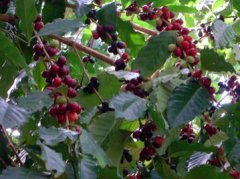
Basic knowledge of Coffee Coffee Tree Classification and growth picking period
Coffee tree belongs to the evergreen tree of Rubiaceae. Since ancient times, most of the plants of Rubiaceae are plants with special effects, such as quinine tree, which is regarded as a specific drug for malaria, and Dugan, which is used to treat amoeba dysentery. Coffee is defined as the most unique alkaloid drinking flora. The fruit of coffee consists of outer skin, pulp, endocarp, silver skin, and seeds (coffee beans) wrapped in the innermost layers mentioned above.
Growth and characteristics of Coffee trees
The origin of the coffee tree is Ethiopia in Africa. In botany, coffee trees belong to the evergreen trees of the subgenus Rubiaceae, and coffee beans, commonly known as coffee beans, are actually the seeds of the fruit of coffee trees. They are called coffee beans only because they are shaped like beans.
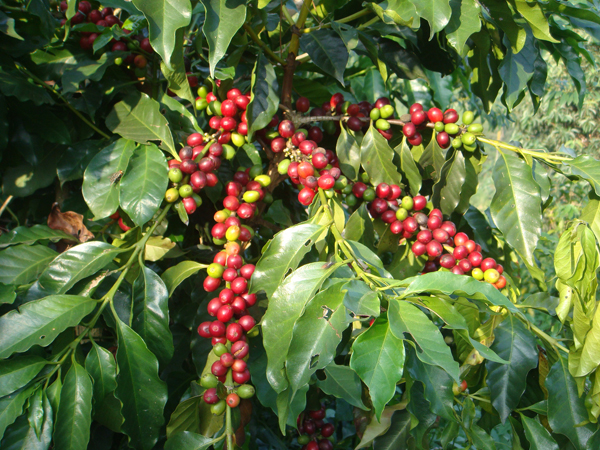
Explain the planting and cultivation of coffee trees in detail to understand the growth environment and needs of coffee trees.
(1) Seedling propagation Coffee seedling propagation can be divided into seed propagation and asexual reproduction. 1. Seed propagation (1) seed collection, seed washing and seed storage during the full ripening period of coffee (the full ripening period of medium-grain coffee in Hainan Island is from February to March, and that of small seed is from September to November). The fully ripe fruits are picked from strong and high-yielding mother trees to make seeds. Immediately after the fruit is harvested, peel and wash the seeds. The method is to place the fruit.

Yunnan small-grain coffee beans with moderate sour taste introduce the growth environment, altitude and other fine coffee beans
Small-grain coffee is suitable for growing in the mountains at an altitude of 800 to 1800 meters. If the altitude is too high, it will taste sour, and if it is too low, it will taste bitter. Small grains of coffee are mostly planted in dry and hot valleys about 1100 meters above sea level, so they are moderately sour, rich and mellow. There is a unique environment suitable for the growth of small seed coffee in many areas of Yunnan, and the quality of small seed coffee is excellent. The planting area is mainly distributed in the

The growth cycle of Coffee and the Coffee Science of picking Fine products
The growth cycle of coffee and the picking of coffee beans are the seeds of coffee trees. After three or four years of growth, the coffee tree matures and begins to bear fruit, with one fruit arranged in clusters or clusters along the branches. The outside of the seed is a layer of peel, which can be picked as soon as it turns red. Under the red skin (exocarp) there is a layer of pulp (mesocarp), inside is a small thin layer, and then there is a layer like parchment
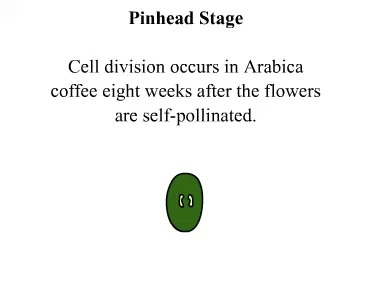
Detailed analysis of the specific changes in the ripening process of coffee beans by diagrams of the growth and ripening process of coffee beans
It takes about 8-9 months (32-36 weeks) for coffee to blossom to ripen. Today, Chongqing Beresta Coffee training School is here to share with friends the whole process of coffee bean growth and ripening. [tiny stage] (the first 8 weeks) Arabica coffee begins to divide eight weeks after flowering and fertilization. [site grabbing stage] (8-12 weeks) vesicle cavity (with ovary)

Coffee trees from flowering to fruiting
Following caf é (Wechat official account vdailycom) found that Beautiful Cafe opened a small shop of its own when you tasted the freshly brewed coffee with those roasted coffee beans in your hand. Have you ever wondered what it would be like for a coffee bean to go from a seed sprinkled on the soil to sunbathing on a coffee tree to becoming a ripe fruit without its mother?
Growth Environment and characteristics of Coffee trees
Coffee gives the public the impression that it is black, bitter and excited after drinking sleepless beverages. The coffee beans we see in the coffee shop are brown, roasted beans and amber.

Introduction to the planting conditions and types of coffee | what are the favorable conditions for coffee cultivation?
Professional coffee knowledge exchange more coffee bean information Please pay attention to coffee workshop (Wechat official account cafe_style) caffeine growth and planting climate factors are prerequisites for coffee planting and growth. Coffee trees are only suitable for growing in tropical and subtropical areas between 25 degrees north and south latitudes, which are often referred to as coffee growing belts or coffee producing areas.
Botanical characteristics of small seed Coffee
Coffee is a shallow root crop, and the plants propagated by seeds are conic roots. From the point of view of varieties, the roots of small and medium grain species are shallow, while those of large grain species are deeper. Yunnan small grain coffee is a 3-year-old 4-year-old fruit tree with a deep main root of about 70cm.
Characteristics of small-grained coffee trees
Coffee is a shallow root crop, and the plants propagated by seeds are conic roots. From the point of view of varieties, the roots of small and medium grain species are shallow, while those of large grain species are deeper. Yunnan small grain coffee is a 3-year-old 4-year-old fruit tree with a deep main root of about 70cm.
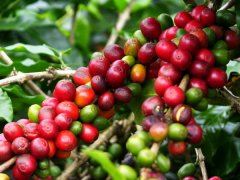
How do coffee trees grow and bear fruit? Coffee Bean Growth
After a period of time in the seedbed, the better-growing seedlings are transplanted to the plantation. In order for the seedling to thrive, it should be watered, fertilized and weeded in time. There is also a need for pest control. After these procedures, coffee trees that have grown for three years are only at the stage of flowering once a year. Rain after the dry season, flowers.

Introduction to the characteristics of taste and growth environment of Colombian coffee flavor description area
It is well known that in the coffee growing industry, the rainy season determines the harvest season of coffee. Throughout Colombia, the main harvest season of Colombian coffee is from October to February of the following year; the secondary harvest season is from April to September every year. It is generally believed that the quality of the main production season is better than that of the secondary production season. Columby

The growth process of coffee the color transformation of coffee beans in a lifetime
Coffee has undergone several color changes from seed to cup. The coffee tree has white flowers, and the coffee fruit is born dark green, which gradually changes to yellow in the process of ripening and finally becomes red. Raw coffee beans are wrapped in coffee fruit, washed, dried and processed before they become coffee seeds wrapped in yellow parchment and then shelled and polished into jade.

Introduction to the structure diagram and growth process of coffee bean structure roaster
The harvested coffee berries need further treatment, usually in two ways. Then there is the Qing Dynasty.
Coffee Encyclopedia Coffee growth knowledge
Coffee is a kind of drink, which gives the public the impression that it is black, bitter, sleepless and excited. The coffee beans we see in the coffee shop are tea-brown, which belongs to roasted coffee beans, while the color of the coffee liquid is amber. Coffee comes from coffee beans, which are harvested and processed from the fruit of trees. The growth habit of coffee: coffee

Graphical planting techniques for the growth process and ripening process of coffee beans
There are four kinds of coffee trees in the world, but the coffee we drink now is mainly the fruit of two kinds of coffee trees, one is Arabica, the other is Robasta. Coffee trees in Arabica are not easy to grow, many are on high-altitude slopes, and picking needs to be done manually. But it is better than the balanced taste and coffee.

Coffee tree, coffee flower, coffee fruit detailed introduction to understand the growth process of coffee beans
Coffee tree is an evergreen tree with small white flowers and green fruits that turn red when ripe. A normal coffee tree can grow to 5 to 10 meters tall, but farmers often prune it to less than 2 meters to make it easier to harvest. After flowering bear a dark green oval fruit, mature fruit from dark green to bright red, due to color and cherry